
March 4, 2026
Prior to California’s Gold Rush, even as the land was part of Mexico’s northern frontier, English-language newspapers began to open for business. Most of these early papers were headquartered in San Francisco, but a few trekked inland past Benicia onward to the delta where a small settlement had taken root on the banks of the Sacramento River. But like most global newspapers of the mid-nineteenth century, early California papers replicated the importance of economics, nearly always on the hunt to portray English-speaking settlers as exemplars of good corporate citizenship.[1] Yet, these early newspapers were also prone to a century’s-plus habit of rumor-mongering and inuendo based on hearsay and heavy-handed editorializing.[2] When it came to the Yuba River, early California news outlets continued to report via habits that press machines throughout the English-speaking world had conducted for centuries. This series of early coverages brings light to how early California newspapers printed stories, often based on hearsay while routinely editorialized.
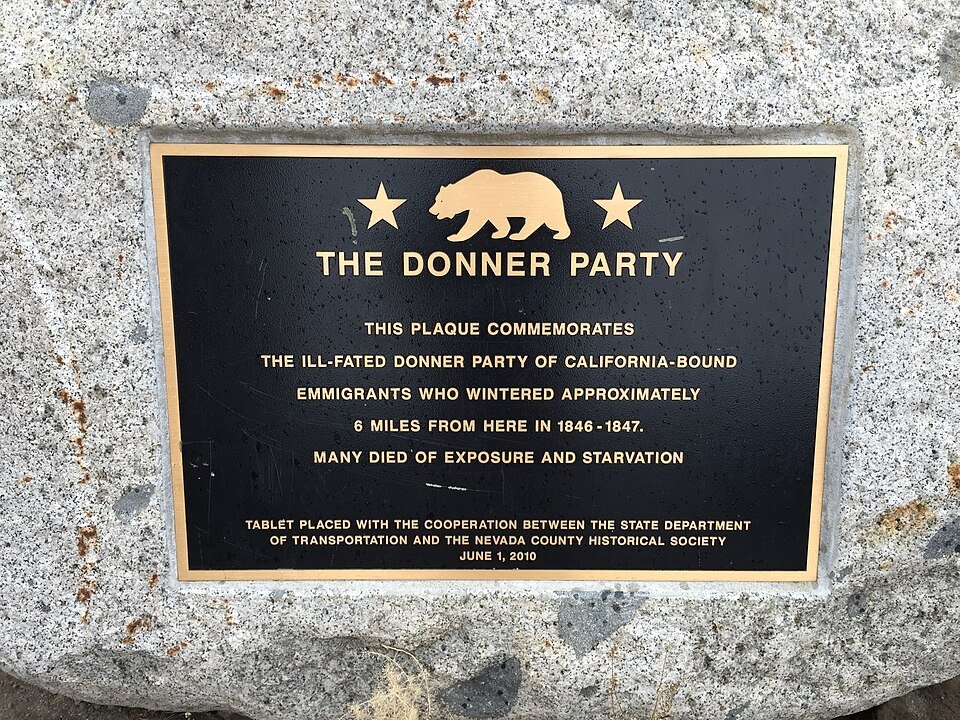
One of the first mentions of the Yuba River in early California newspapers came in relation to the ill-fated Donner Party. The California Star, on March 13, 1847, printed accounts of a journal written by Aquila Glover, one of the rescuers that discovered the survivors. Glover wrote that they had left the Bear River Valley on the 15th of February, 1847, to arrive and camp on the Yuba River. They spent the next day making snowshoes before trekking upriver on the 17th. Glover wrote that the snow on the Yuba River was “fifteen feet deep, dry and soft.” Crossing a summit on the 19th, Glover and other rescuers discovered the “immigrants” in a camp near Truckey Lake “in a most deplorable condition.”[3]
The next mention of the Yuba River in California newspapers, though, came after the Gold Rush was already in full swing. In January of 1848, a small crew reconfiguring and deepening a sawmill’s tailrace on the South Fork of the American River spotted several glinting flakes in the dirt and mud that they had moved. A year and two months later, many of the rivers and streams along the western flank of the Sierra Nevada Mountain range also yielded gold, and the Yuba River was among them. It was in March of 1849 that the San Francisco-based Weekly Alta California next mentioned the Yuba River. Its waters yielded gold, an average of “one and a half to two ounces” a day to any miner despite the fact that the “stream is much swollen” from winter snows.[4]
But by this time, the rush for yellow flakes and nuggets found insistent attention. Miners had discovered gold on the Feather River, Bear River, Dry Creek (near Rocklin and Roseville), Cosumnes River, Mokelumne River, and the Stanislaus. In March of 1849, many newspapers declared that it was the Stanislaus River that had “allured the uninitiated gold hunter to the early conquest…”[5]
Enduringly, California newspapers in the middle of the nineteenth century continued with the global and century-long practices of printing rumors and hearsay. In early April of 1849, the Weekly Alta California used a Benicia letter to report that the “Yuba is entirely deserted” of miners save a mere five families. Despite “25 and 32 dollars per day,” miners left the Yuba River going south, likely the Stanislaus.[6]
The Daily Placer Times, based in Sacramento, took to insults about the extraction of gold from the Yuba River.
“Under this head, we are sorry to say, the news are intolerably stupid.”
Edward C. Kemble, only twenty years of age at the time, wrote that “the search for gold” on the Yuba River “is well nigh given over.” Although plenty of gold remains, stated Kemble, the 100 miners or so working the ore on the Yuba preferred “a suspension of labor to hard work,” choosing the easy pickings of a mere “10 dollars or an ounce per diem.” Kemble then compared that to one unnamed yet enterprising miner on nearby “Bear Creek, who, assisted by several Indians, turns out about forty dollars per day.” Of note, Kemble also let it be known that machines were brought in on the Stanislaus to extract gold from clay at “unusual depths…” To Kemble, the employment of Indians and machines to extract gold made sense. But what was happening on the Yuba, in his estimation, was just “stupid.”[7]
In case you were wondering about these “machines” alluded to by Kemble, they were rockers, box-like things with a sluice set upon a curved bottom. A large stick protruded above the sluice where a miner’s grip could then rock the box back and forth as water slid down the ribbed sluice, trapping gold flakes. After Kemble’s departure, The Daily Placer Times changed ownership, and it was the Daily Placer Times and Transcript that first identified these machines successfully extracting gold from the Yuba River. In September of 1849, the paper touched on the success of four unnamed individuals who took $6,000 a piece in eight days employing rockers.[8]
[1] For example; newspapers in the U.K. had long tied economics and citizenship as one as far back as the late seventeenth century. See, Phil Withington, ‘Public Discourse, Corporate Citizenship, and State Formation in Early Modern England’, American Historical Review, vol. 112, no. 4 (October 2007), 1030.
[2] Studies of newspapers in the eighteenth and nineteenth centuries are deep. A short list of rumor-filled papers and why and how they profited see; Charles E. Clark, The Public Prints: The Newspaper in Anglo American Culture (London: Oxford University Press, 1994), 250; Nicholas Rogers, Whigs and Cities: Popular Politics in the Age of Walpole and Pitt (Oxford, UK: Oxford University Press, 1989), 353; Kevin Williams, Read All About It! A history of the British Newspaper (London: Routledge, 2010), 4.
[3] “Letter from the California Mountains,” California Star, vol. 1, no. 10 (13 March 1847), 4-5. https://cdnc.ucr.edu/?a=d&d=CS18470313.2.7
[4] “Latest from the Mines,” Weekly Alta California, vol. 1, no. 13 (29 March 1849), 5. https://cdnc.ucr.edu/?a=d&d=WAC18490329.2.8.4
[5] ibid.
[6] “Latest from the Mines,” Weekly Alta California, vol. 1, no. 15 (12 April 1849), 2. https://cdnc.ucr.edu/?a=d&d=WAC18490412.2.4
[7] It should be noted that Kemble left Sacramento to work in San Franciso the following month. Maybe one of those “stupid” miners on the Yuba took umbrage and chose to visit Kemble? One may never know. “The Placer,” Daily Placer Times, vol. 1, no. 2. (5 May 1849), 2. https://cdnc.ucr.edu/?a=d&d=DPTT18490505.2.5
[8] “The Mints,” Daily Placer Times and Transcript, vol. 1, no. 18 (8 September 1849), 2. https://cdnc.ucr.edu/?a=d&d=DPTT18490908.2.3